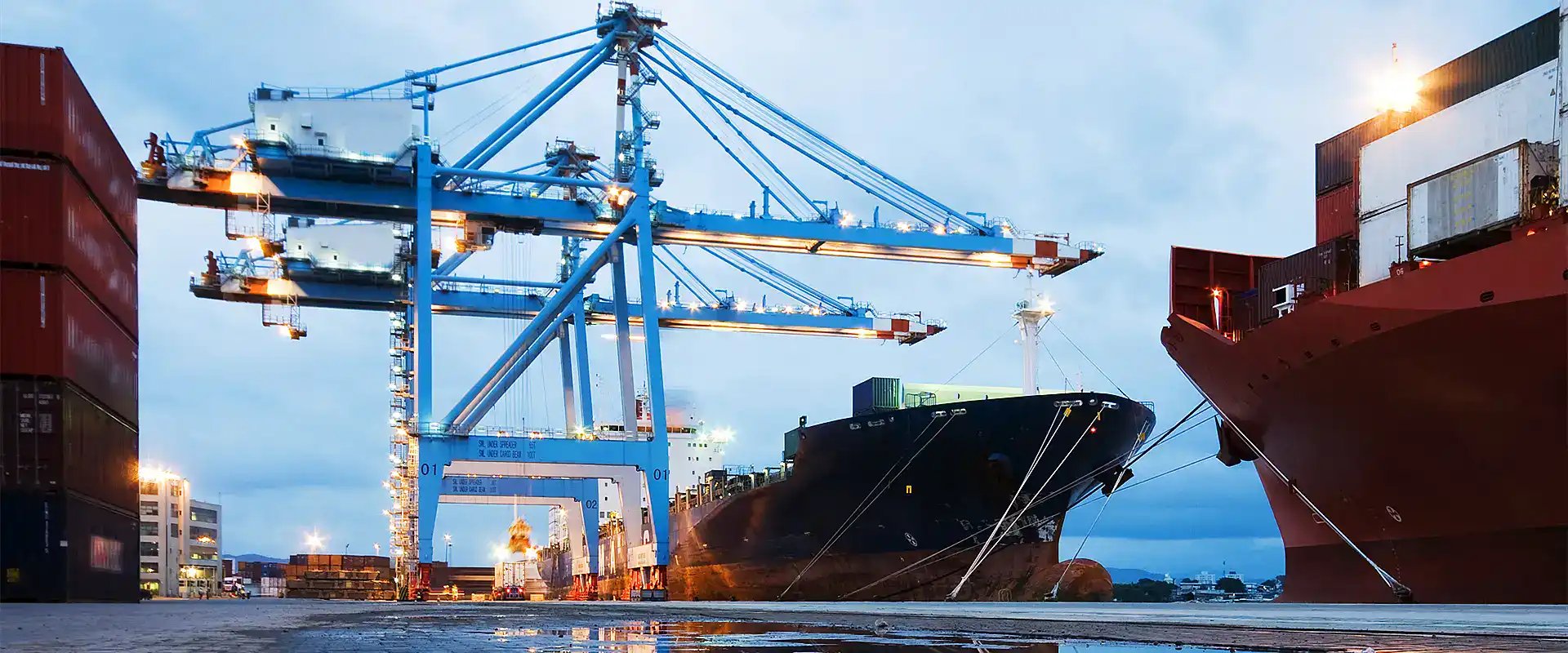
When a large vessel arrives at a port, thousands of tons of force are transferred through the mooring system.
Although they may look like simple steel structures, mooring bollards are one of the key components that keep vessels safely secured alongside a berth.
A properly designed bollard helps transfer mooring loads from the ship to the quay structure and supports stable port operations.
What Is a Mooring Bollard Used For?
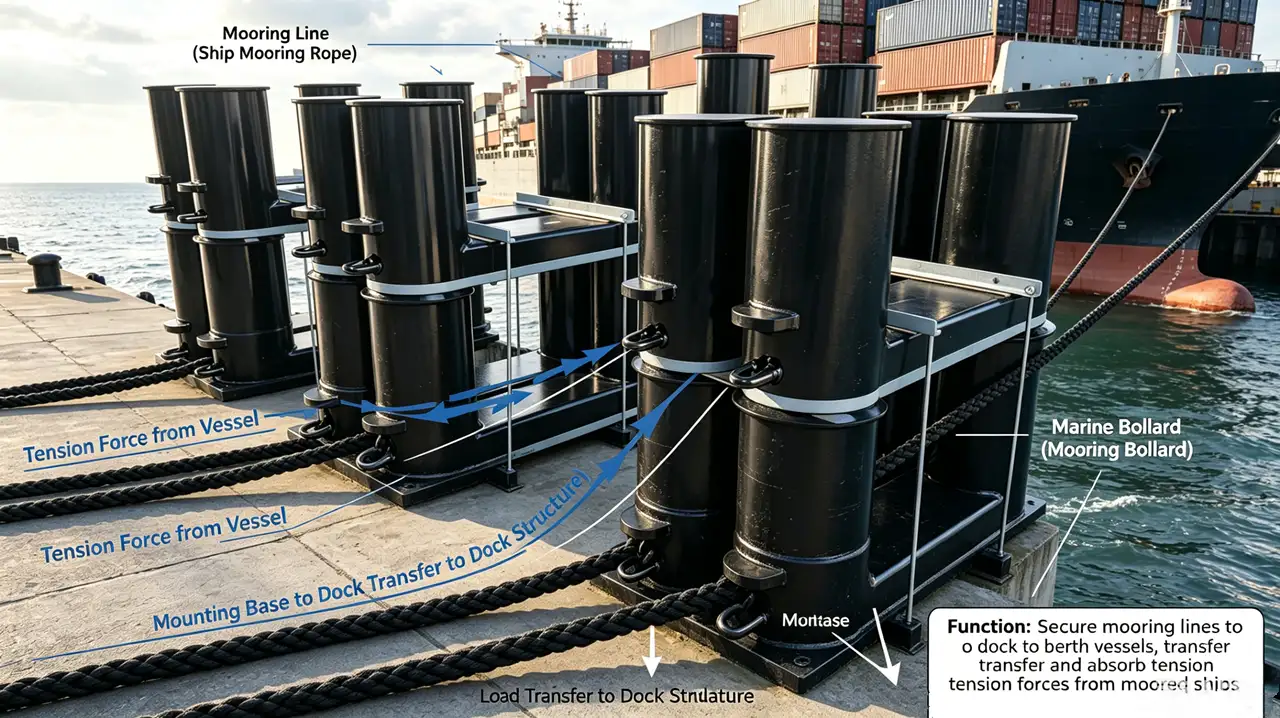
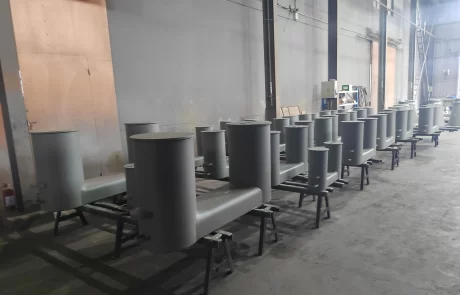
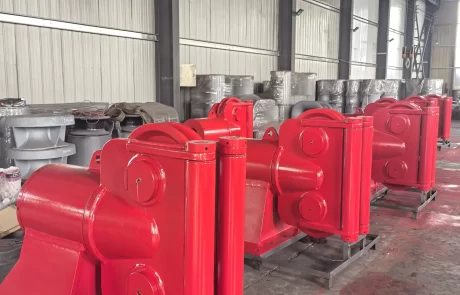
A mooring bollard is a fixed structure installed on a quay, pier, or offshore facility. Its main purpose is to provide a secure point where mooring lines can be connected.
During vessel berthing, mooring ropes transfer forces between:
- Ship
- Mooring lines
- Bollards
- Quay structure
The bollard must safely handle these forces under different operating conditions.
Why Mooring Bollards Are Important
A vessel at berth is affected by many external forces. These include:
- Wind pressure
- Tidal changes
- Current
- Wave movement
- Passing vessels
Without reliable mooring points, the vessel may move excessively and create risks for:
- Ship structure
- Terminal equipment
- Port workers
- Nearby vessels
Different Types of Mooring Bollards
The suitable bollard design depends on the application and expected loads. Common types include:
T-Head Bollards—These are widely used in ports because they provide reliable rope holding capability and simple operation.
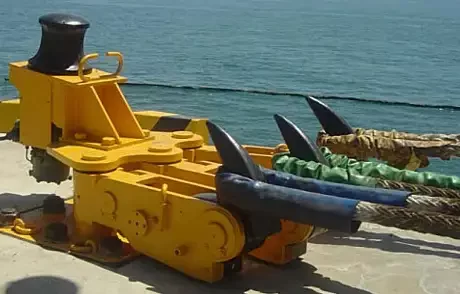
Horn Bollards—Horn-shaped designs help keep ropes in position and are often used where stable rope placement is required.
Staghorn Bollards—These provide multiple rope connection options and are suitable for different mooring arrangements.
Double Bollards—Double bollard designs allow multiple lines to be handled when higher flexibility is needed.
Different Types of Mooring Bollards
Choosing a suitable bollard requires more than considering appearance. Important factors include:
Working Load
The bollard must match the expected mooring forces from the vessel.
Large ships usually require higher-capacity mooring equipment.
Vessel Type
Different vessels create different loading conditions. For example:
- Container ships
- Tankers
- Bulk carriers
- Offshore vessels
Port Environment
The installation location also affects selection. Engineers consider:
- Berth structure
- Weather conditions
- Tide range
- Vessel traffic
How Mooring Bollards Work Together with Other Equipment
A bollard is only one part of a complete mooring system. It works together with:
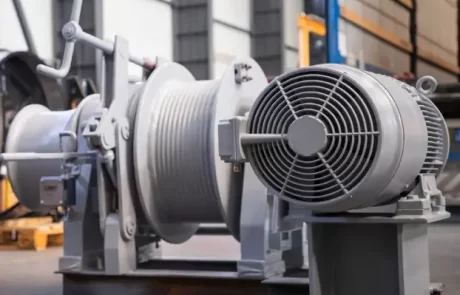
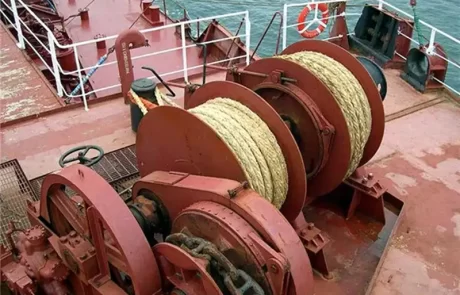
- Mooring winches
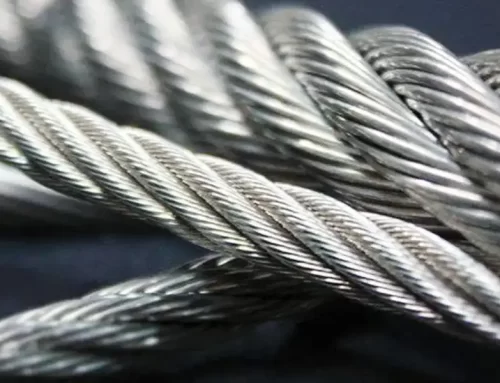
- Mooring ropes
- Fairleads
- Quick-release hooks
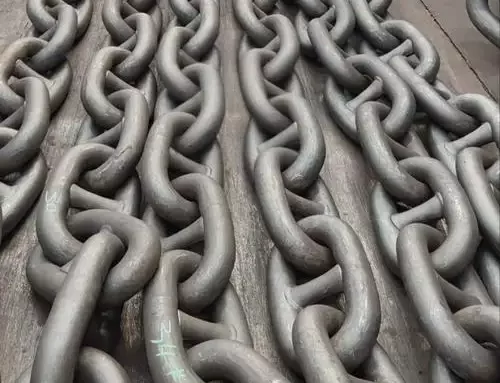
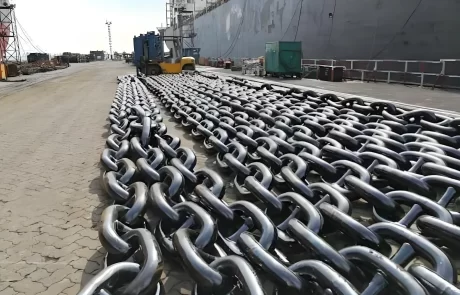
- Chain systems
Each component has a specific role.
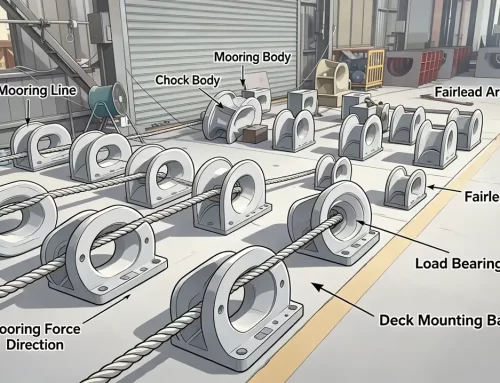
The rope transfers the force, the fairlead controls direction, and the bollard provides the secure attachment point.
Common Problems with Mooring Bollards
Although bollards are designed for heavy loads, problems may still occur. Common issues include:
Corrosion—Long-term exposure to seawater can affect surface protection.
Overloading—Using equipment beyond its rated capacity may create safety risks.
Poor Installation—Incorrect foundation design can reduce performance.
Lack of Inspection—Regular checks help identify damage before failure occurs.
Maintenance Tips for Mooring Bollards
Proper maintenance can extend service life. Recommended practices include:
- Checking for corrosion
- Inspecting connection areas
- Confirming structural condition
- Removing surface contamination
- Maintaining protective coatings
For busy terminals, regular inspection is an important part of safe operation.
Why Reliable Mooring Points Matter
A strong mooring arrangement helps ports achieve:
- Safer vessel operations
- Reduced equipment damage
- Better handling efficiency
- Lower operational risks
For modern ports, mooring bollards are an essential part of marine infrastructure.
Mooring bollards play a simple but important role in vessel safety. By providing reliable connection points for mooring lines, they help ships remain stable during loading, unloading, and port operations. Selecting suitable bollards and maintaining them properly ensures better performance throughout the service life of the port facility.
FAQ
What is a ship mooring bollard?
A ship mooring bollard is a fixed structure used to secure vessel mooring lines at ports, terminals, and marine facilities.
How do mooring bollards handle ship loads?
They transfer forces from mooring lines into the quay or foundation structure.
Are all mooring bollards the same?
No. Different designs are selected based on vessel size, load requirements, and installation conditions.
How often should mooring bollards be inspected?
Inspection schedules depend on the environment and usage, but regular checks are recommended for safety.